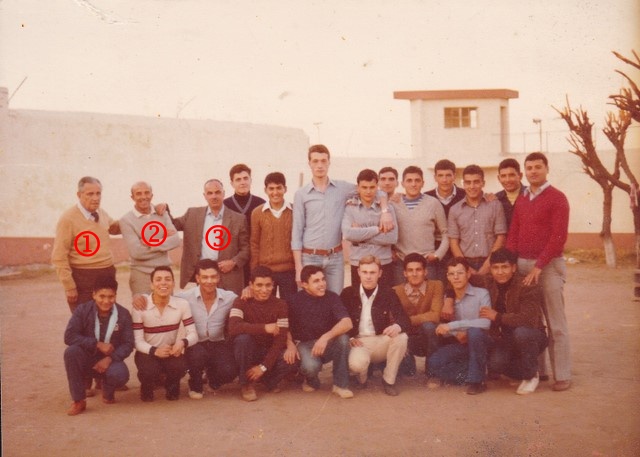
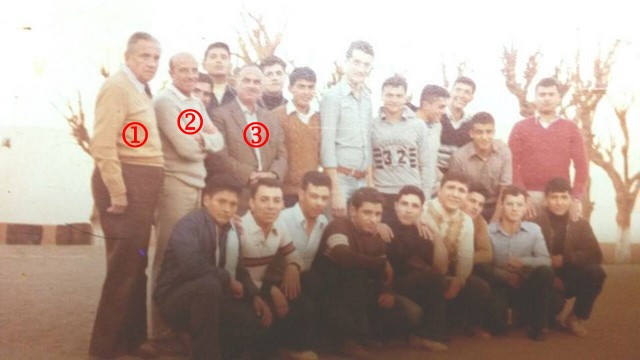
The uncles: Balocco, Luís Pablo, class yearBirth-year cohort used to organize military-service call-ups.View in glossary 1925 Account of his case.
On December 28, 1978, my father was summoned as part of the reserve to join the military ranks. This happened in Concordia, Entre Ríos.
At that time, his arterial system and heart were quite deteriorated. So, when he appeared, a Medical Board had to be held to determine if he was fit to join. They told him they would do it but he had to wear the military uniform.
Due to his refusal to be a conscientious objector, he spent some time uncommunicado in the Regiment of Concordia, in the infirmary. Then he was transferred to common prison, (not military) among convicts for different crimes. At that time my mother and a younger sister of 13 years old (Susana) were left alone at home without knowing the outcome of this matter. Brother Jorge Bove also went through the same situation.
Soon after, due to his health, he was transferred to the public hospital of the city with police custody (not military) 24 hours a day. There were some days when he could come to his house for an hour, and the police had to accompany him. It should be clarified that since he left the regiment, the family could see him at certain times.
Over time, he was transferred to the Military Prison of Convicts Campo de La Rivera, in Córdoba (at the end of 1979). My mother and sister accompanied him but could not stay with him. A family of witnesses gave them accommodation. However, as his health worsened, my mother allowed her to stay with him all day, although my younger sister traveled alone back and forth every day from the accommodation to Campo de La Rivera.
During this time, my mother had connected with different military officials but there was no response about the medical board, although the evidence showed that his health was deteriorating rapidly. One of these military men left her a phone number so she could call him in case of any emergency. One day a military truck arrived and one of them told my mother that he had orders to take my father and did not say where. In response to this, my mother called the aforementioned military man, he asked to speak with the one coming on commission, and then they withdrew. They did not take him to my father, but we do not know what would have happened if my mother had not acted quickly.
About three years into this story, he was taken to Paraná, Entre Ríos where he was interned to have the medical board. He received verbal mistreatment from young officers who did not approve of his neutral stance. Finally, he was taken to Buenos Aires, and after two and a half years, the military medical board determined that he was not in condition to be incorporated, 100 percent unfit.
He returned to his home, with a total disability to move, with all the emotional trauma that this meant. My sister still suffers emotional problems to this day from what she lived in her adolescence. Her mother (our grandmother) fell into depression which finally led to her death. After suffering physically and emotionally, and the wear and tear that all this caused in my mother, she died on May 28, 1986, days after turning 61 years old, leaving my mother a widow at the age of 57.
Despite the consequences this caused for the family, we are happy that our parents were loyal until death, and an example for their children, and so many young people who knew them, that without a doubt instilled in them the determination not to give up even in the face of death.
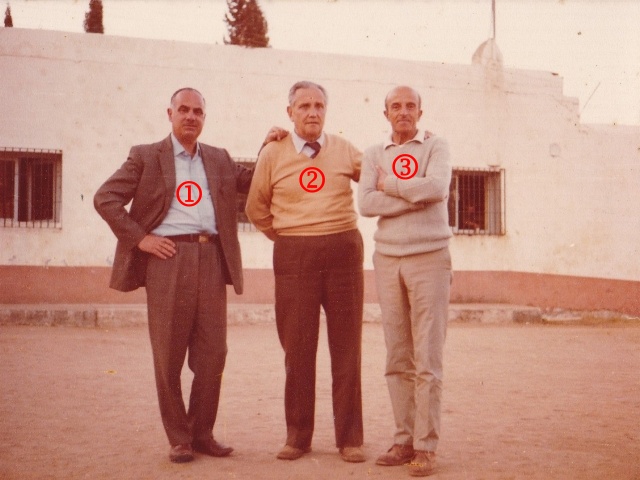
Relatored by his son Enrique Balocco.