My Story (Raul, Oscar Sosa), class yearBirth-year cohort used to organize military-service call-ups.View in glossary of 1965
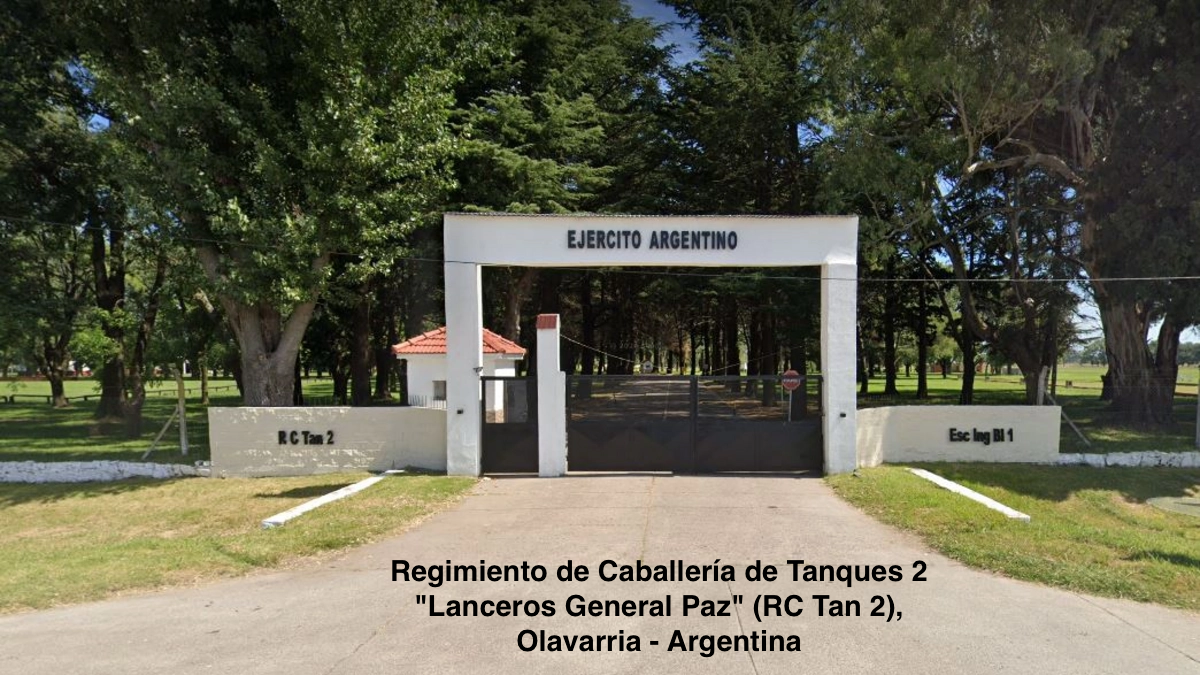
In mid-1984, I was called up for military service in the Argentine Army. More specifically, I was assigned to the 2nd Tank Cavalry Regiment “Lanceros General Paz” (RC Tan 2), in the city of Olavarría, Buenos Aires Province.
We arrived at the military unit
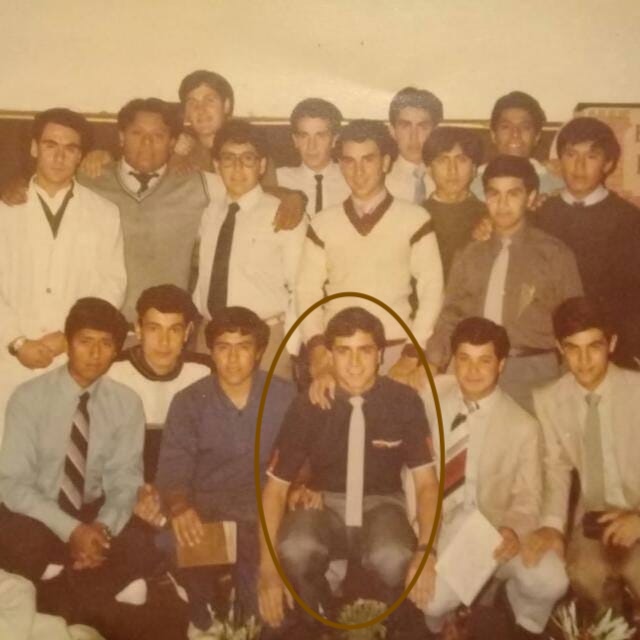
As soon as I arrived, I met three other brothers: Mario Penzo, Eduardo Panizzo, and Carlos Monzon. We stayed together the whole time. We went through the routine registration process. They cut our hair and gave us a medical examination.
A few days later, they assigned us to clean an area of the base. Like all the other recruits, we were still wearing civilian clothes. On the third day, we talked among ourselves and decided that we needed to identify ourselves as Jehovah’s Witnesses. A sergeant then ordered us to do other tasks. At that point, we told him that we would not take part in military training or put on military clothing. The sergeant took us to speak with the regimental captain.
The test begins
At that moment, soldiers were assembled in the main square, and the captain was in the middle, shouting at them. The sergeant approached him and reported that four citizens were refusing to perform military service. The captain turned red with indignation and began shouting at me and the other three brothers. He said something like, “You will take part in military training and put on the green military uniform. That is an order.”
I answered respectfully but firmly: “Captain, for reasons of conscience, we will not do what you have ordered us to do.” The captain became even angrier and told the sergeant to take us to the detention cells immediately.
The walls spoke…
The detention area consisted of very small cells. They put us in separate cells. Each one had only a door and a small window. They shoved us inside and kicked the doors shut violently, but they did not touch us.
Another problem was that they had not given us any food, and we were very hungry. After a while, they brought us something to eat.
We were frightened and anxious. We had never been in a situation like that in our lives. The next day, we noticed sunlight coming through the window. It illuminated the gray-painted wall. In the light, I could see that something had been written on the wall and then painted over. But the light and shadows made the words readable: “Jehovah is my shepherd. I will lack nothing.” —Psalm 23:1.
At that moment, I felt enormous relief, knowing that Jehovah was with us. I immediately looked through the small window in the door and told the other brothers what I had discovered. They, too, found scriptures that greatly encouraged us.
A proposal
After a few days, they took us to speak with the highest-ranking officer in the military unit, General Benjamin Cristoforetti. He treated us well, but told us that we would be transferred to a military prison.
Not long after that conversation, the captain who had sent us to the cells came back and made us a proposal. He said, “If you take part in military training, we’ll put you in the infirmary, where you can wear white clothes instead of the green military uniform. You’ll also go home with the first group of soldiers. Think it over and give me your answer tomorrow.”
The next day, the captain returned, and we told him we did not accept his proposal. He became very angry and shouted that we were going to prison. We replied that we already knew that. This made him even angrier.
So, for a time, we lived in the building of a small school inside the military unit.
A visit
The following weekend, we were told that we had visitors. This seemed very strange because we did not know anyone in that city. It turned out to be local brothers who had somehow learned that we were there. They brought us cakes and other treats. It was very comforting to receive the brothers’ affection.
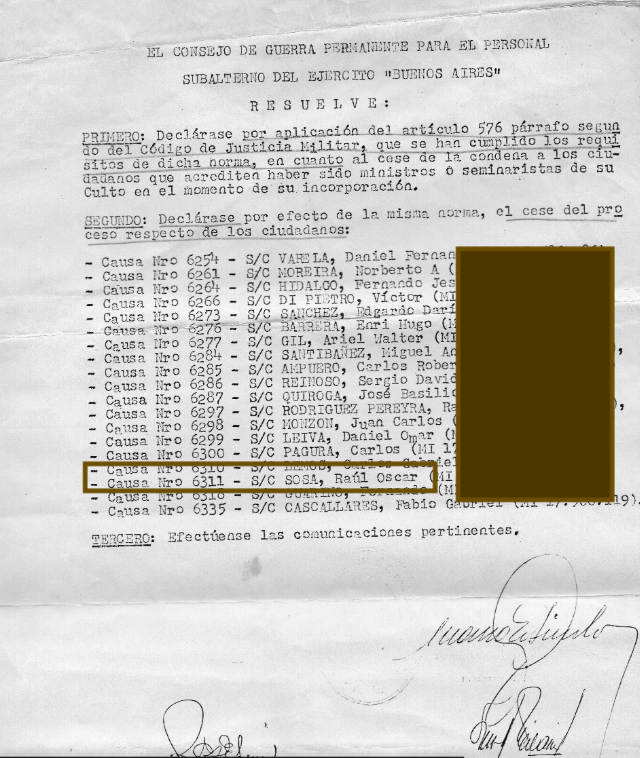
After four months, they sent us to the military prison at Campo de Mayo, in Buenos Aires. A year and a half later, on September 21, 1985, our case was closed, and we were allowed to go home.